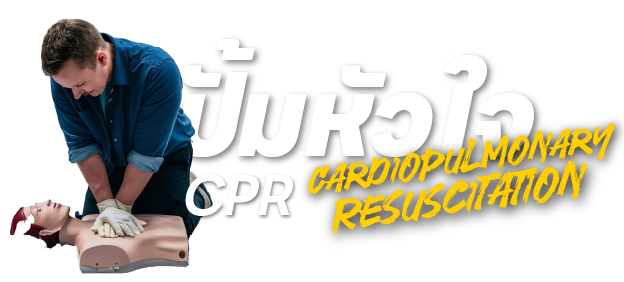
CPR resuscitation

If you find someone unconscious, don't panic or cry. You must stay calm and find a way to provide first aid and contact the rescue team as soon as possible. Always remember that at this moment, only you can save their life. Don't wait, hurry up and learn to save lives.

What is CPR?

Cardiopulmonary resuscitation (CPR) or resuscitation means an operation to help restore the circulatory system that has suddenly stopped working so that the heart can beat normally without causing brain damage.

What should you check before performing CPR?

When you find an unconscious person, check for safety before going to help, such as being careful of accidents, electric shock, or risks that may occur again.

  • If the symptoms of people around you change, do the following:
    Observe the initial symptoms. If the face turns pale, the color turns blue, or there is snoring and difficulty breathing, it means that urgent help is needed.
    Wake up the patient with a loud voice and pat both shoulders. Do not shake or use force to wake them up. If the patient is conscious and breathing on their own, place them on their side. If they are still not breathing, do the following:
 

  • After trying to awaken them, if they still do not regain consciousness, carefully open their mouth (airway) to help them breathe easily. Lay their head flat on the floor and slowly open their mouth by putting your hand on their chin and try to observe their airway as shown in the picture.
  • Observe, listen and feel if he is breathing.
 

  • Assess the patient. If the patient is unconscious and not breathing, perform CPR immediately and call an ambulance urgently at 1669 and perform CPR immediately, along with an AED (if available).

What are the basic life support CPR?

  • First, position the patient by performing chest compressions and positioning them supine.
  • Place the heel of one hand on the lower half of your breastbone and place the other hand over it and clasp it together.
  • Begin chest compressions with a depth of at least 5-6 centimeters at a rate of 100-120 compressions per minute (see Chest Compression).
 

  • Do the same thing, pump the heart 30 times + blow air 2 times until the ambulance arrives or he/she regains consciousness.
 

Automated External Defibrillator (AED)

If an AED is available, turn it on, remove the victim’s clothing, place the AED pads or conductive pads below the right collarbone and left rib cage, and do not touch the victim.

Follow the instructions of the AED: if the machine asks for a shock, press the shock button and perform chest compressions immediately after the shock. If the machine does not give a shock, continue chest compressions.

Continue chest compressions, perform CPR, and follow the AED instructions until the rescue team arrives.

Transfer the patient to the rescue team for transportation to the hospital. This will help the emergency patient have a better chance of survival and safety.

Tags

ปั้มหัวใจ (2)